What Does an Initial Pest Control Service Address?
What Does an Initial Pest Control Service Address?
Summary: A first pest control visit starts with an inspection inside and outside the home, followed by a treatment tailored to what the technician finds. This guide explains what Pointe’s initial service covers, how to prepare, and what to expect in the weeks after.
Booking pest control for the first time usually starts with a specific annoyance. Maybe it is ants marching along the kitchen counter in Naperville, mice scratching in a basement ceiling in West Chicago, or spiders that seem to rebuild their webs in the garage every other morning. You know what you want gone, but you may not know what a technician will actually do once they pull into the driveway.
That first appointment is a little different from every visit that comes after it. This article walks through what an initial pest control service addresses at Pointe, from the inspection inside and outside your home to the first treatment, along with how to get the house ready and what to expect in the weeks that follow.
Why the First Visit Looks Different From the Rest
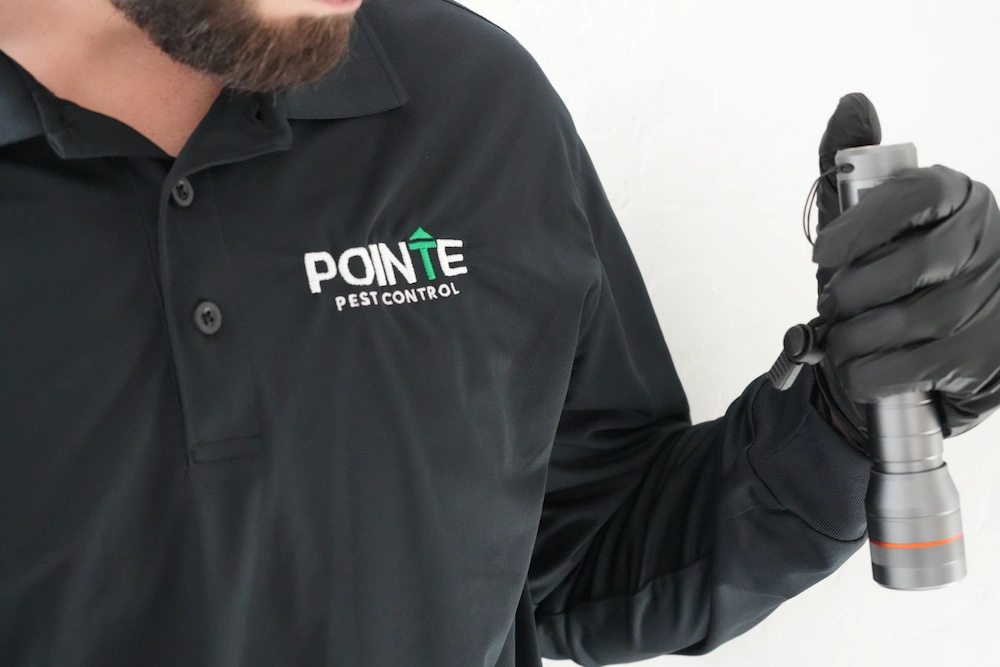
Think of the first appointment as the one where the technician learns your house. Later visits build on what gets found that day, so it tends to be the longest and most thorough stop of the year. A tech who has never seen your home needs to figure out which pests are present, where they are coming in, and what conditions are keeping them around before deciding how to treat.
Ongoing visits happen on a quarterly basis and focus mainly on the exterior of the home, with inside service done on an as-needed basis. The initial service is where both sides get attention. That is why it is worth being home for it, asking questions, and pointing out every spot where you have seen activity, even the ones that seem minor.
The Problem You Called About Is Only the Starting Point
Most people call about one pest. The technician will still look at the whole picture, because a house with a carpenter ant trail along the back deck may also have a damp crawl space or a gap under the garage door that lets in crickets and spiders. Pointe’s approach is Integrated Pest Management, which means examining your particular situation first so the treatment targets the source of the problem instead of spraying everything the same way.
The Inspection: Where the Technician Looks
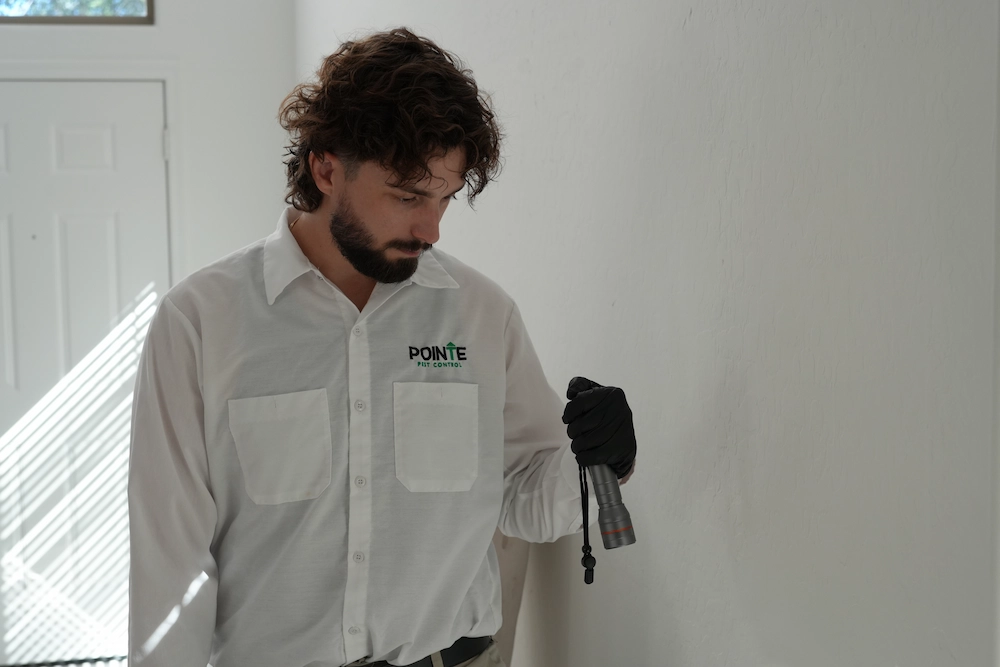
The inspection is one of the most important tasks performed during the initial service. Our residential pest control services page describes a comprehensive look at your home and its surroundings, with technicians trained to spot immediate problem areas along with the places pests typically nest, both indoors and out.
Inside the House
Indoors, the page names specific target areas: kitchens, bathrooms, laundry rooms, basements, and attics. Special attention goes to the cracks and crevices under sinks and around appliances. Those spots share a few things pests like, usually some combination of moisture, crumbs, warmth from a motor, and a dark gap nobody cleans behind.
In practice, that means you should expect the technician to open the cabinets under the kitchen and bathroom sinks, look behind or beside the refrigerator, dishwasher, and washing machine where they can, and check basement corners and the sill area where the house frame meets the foundation. An attic check may involve looking for droppings, nesting material, or insects gathered near vents. If something is blocking access to an attic hatch or a utility room, it slows the inspection down and can leave a blind spot.
Around the Outside
Outside, the technicians focus on the many critical entry points that let pests into a home. Eaves, garages, and sheds are locations that they inspect and treat, along with other commonly infested areas. In the western suburbs, garages and sheds tend to be busy spots, since they hold bird seed, pet food, lawn gear, and stacks of boxes that stay put for months.
A typical exterior walk-around often includes the foundation line, door thresholds, window frames, spots where pipes or wires pass through the siding, and the area under decks and porches. If you have noticed ant hills along the driveway, wasps under the soffit, or rodent burrows near the shed, point those out early so they become part of the plan.
What the Technician Is Looking For
Inspection is less about finding a single bug and more about reading clues. Droppings, shed skins, chewed material, webs, mud tubes, ant trails, grease marks along baseboards, and gaps around utility lines all tell part of the story. Our technicians identify the pest, the areas of concern, and the best treatment options, and then sit down with the homeowner to put together a treatment plan.
The age and style of the house shape what turns up. An older home near downtown Aurora might have a settled foundation, worn window frames, and plenty of small gaps around old utility lines, while a newer build in a Naperville subdivision on former farmland may see more field pests working in from open ground nearby. Neither is better or worse, but they call for different attention, which is why a walk-through comes before any treatment.
What Gets Treated on Day One
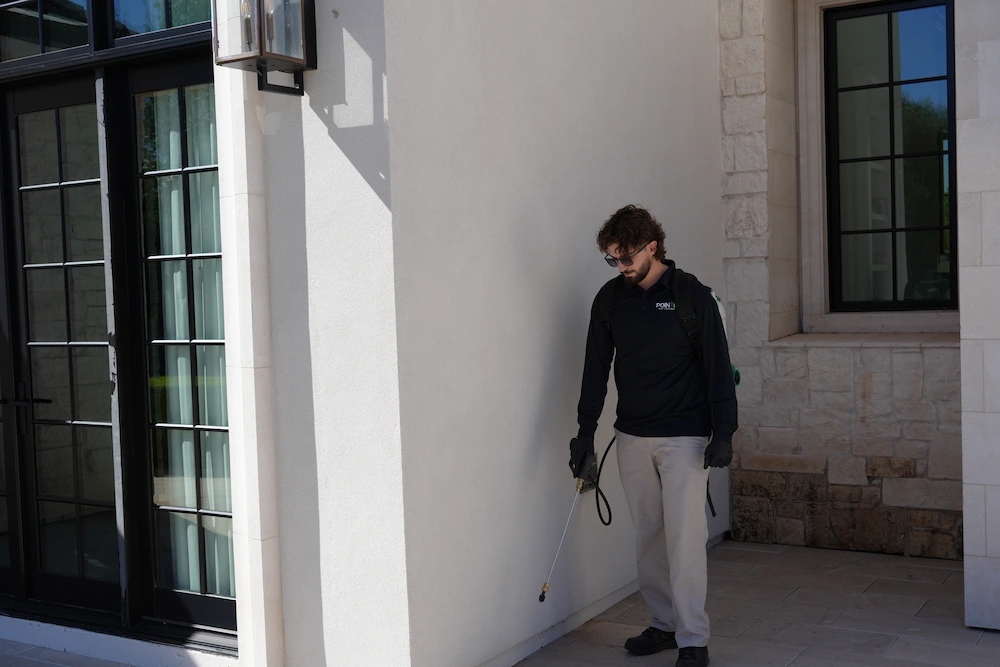
Once the inspection is done, treatment often happens during the same visit. What gets applied, and where, depends on what turned up. Pointe’s technicians assess the particular problem first rather than using a generic, one size fits all treatment, so two houses on the same street can get noticeably different service.
Interior Treatment
Pointe’s inside service as focused on eliminating pests using environmentally safe, green products and service methods. That treatment typically goes into the same target areas the inspection covered: the cracks and crevices under sinks, around appliances, and in other spots where pests hide and travel. We use EPA-approved products and EcoSMART technologies as part of our Integrated Pest Management approach.
Ask your technician which rooms were treated and whether there is anything you should avoid doing in those areas for a while. Instructions can vary with the product and the pest, so the person standing in your kitchen is the right one to give you the specifics.
Exterior Treatment
Outside, the goal is to stop pests before they reach the walls. Eco-friendly liquid treatments with low residual toxicity create a barrier between your home and pests, and the areas that we treat include eaves, garages, and sheds. On a first visit, this exterior work sets up the protective barrier that later quarterly visits are meant to reinforce.
Dewebbing and Other Extras
Many homeowners expect a first visit to include knocking down spider webs from eaves, window corners, and light fixtures. A typical initial service at many pest companies often includes some dewebbing, since clearing old webs and egg sacs makes it easier to see new activity later. If you notice an especially high concentration of spiders and their webs, mention it when you book or ask your technician during the visit.
Rodents are a similar case. Pointe’s technicians walk the perimeter of the home, identify potential entry points, and seal them up once they are found. If mice or rats are part of the reason you called, say so up front so the visit covers that kind of rodent work instead of only a general insect treatment.
Getting Ready for the Visit, and What Comes After
A little prep makes the first visit go faster and gives the technician a clearer view of the problem. None of it needs to be elaborate, and a typical checklist looks something like this:
- Clear out the cabinets under the kitchen and bathroom sinks, or at least push items toward the front.
- Make sure the attic hatch, basement corners, and utility room are reachable.
- Note where and when you have seen pests, and save a photo if you snapped one.
- Keep pets in a separate room or crate during the treatment.
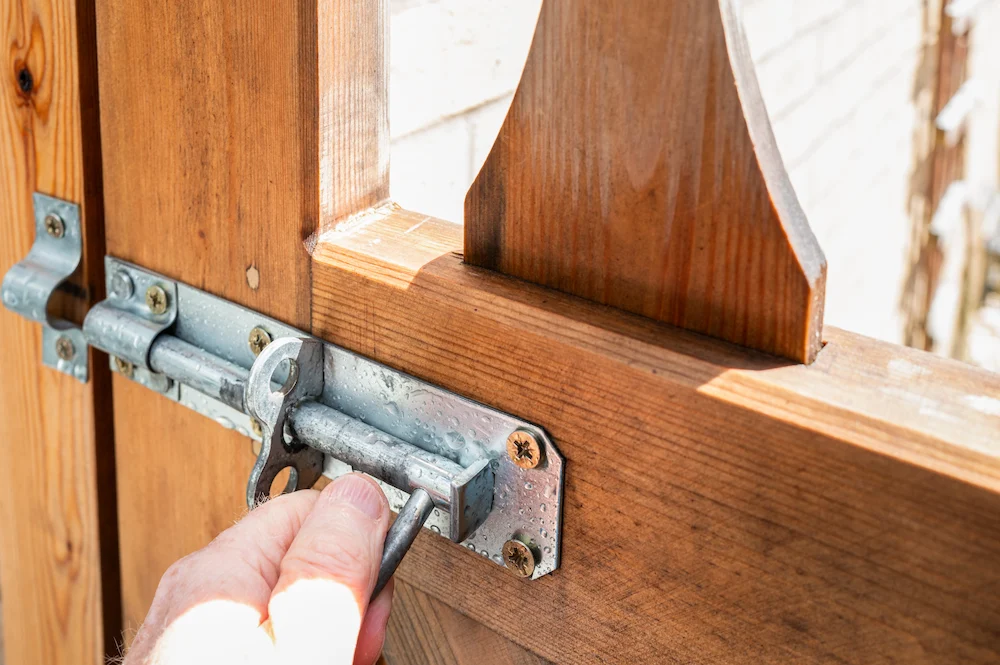
- Open side gates, the garage, and any sheds you want looked at.
Your notes are more useful than you might think. A comment like “the ants only show up on the counter by the dishwasher after it rains” points the technician toward moisture near a specific wall, which can save time and lead to a better treatment.
The Days and Weeks That Follow
Some activity in the first stretch after treatment is not unusual, especially with ants or with pests that were already established inside. Give the treatment time to work before deciding it failed, and keep an eye on where you still see activity. If pest activity persists after a service call, our team will return for free until the problem is solved.
From there, the regular quarterly visits take over. Those are mostly exterior-focused, with inside work added when you need it, so the heavy interior attention you got on day one is not something to expect at every stop. Small habits between visits help the treatment hold up, such as wiping up crumbs, fixing a leaky trap under the sink, and keeping firewood and stored boxes away from the walls.
Your First Pointe Visit in the Western Suburbs and Central Illinois
An initial pest control service is mostly about information. The technician inspects inside and outside, looking closely at kitchens, bathrooms, laundry rooms, basements, attics, eaves, garages, and sheds, and then treats based on what they found instead of a generic routine. Prep your sinks and access points, share your notes, and ask about anything you expected but did not see, such as dewebbing or rodent sealing.
If you are ready to book that first visit, the Naperville pest control team at Pointe can walk your home and put together a plan that fits it. Pointe also serves Aurora, Wheaton, and West Chicago, along with Bloomington and Champaign in Central Illinois, so a call can get your first inspection on the calendar before winter pests settle in. Contact us for a free quote today!
Citations
How to prepare your home for a pest control visit. (n.d.). Terminix. Retrieved November 11, 2026, from https://www.terminix.com/pest-control/how-to-prepare-for-pest-control/
Request a Free Quote Today
(We do not share your data with anybody, and only use it for its intended purpose)
