
Why Do Bugs Gather on Houses in the Fall?
Why Do Bugs Gather on Houses in the Fall?
Summary: Bugs gather on Chicagoland homes in the fall to warm up on sunny walls and to find sheltered gaps where they can spend the winter. This guide explains which pests do it, why some show up indoors in January, and how sealing and early fall treatment can help.
Every October, the same scene plays out on houses across the western suburbs. One warm afternoon you step outside and the siding by the back door is speckled with orange beetles, the window trim is crawling with black and red bugs, and a few fat flies are sitting on the glass like they own the place. It looks like an infestation started overnight, and homeowners in Geneva and St. Charles end up asking the same thing: “Why do bugs gather on my house in the fall?”
The short answer is that your house is warm and full of hiding spots. This article explains what is actually going on when insects pile up on a sunny wall, which pests are usually behind it in Chicagoland, why some of them turn up indoors in the middle of winter, and what can help make your home a less appealing place to spend the cold months.
A Sunny Wall Works Like a Heat Lamp
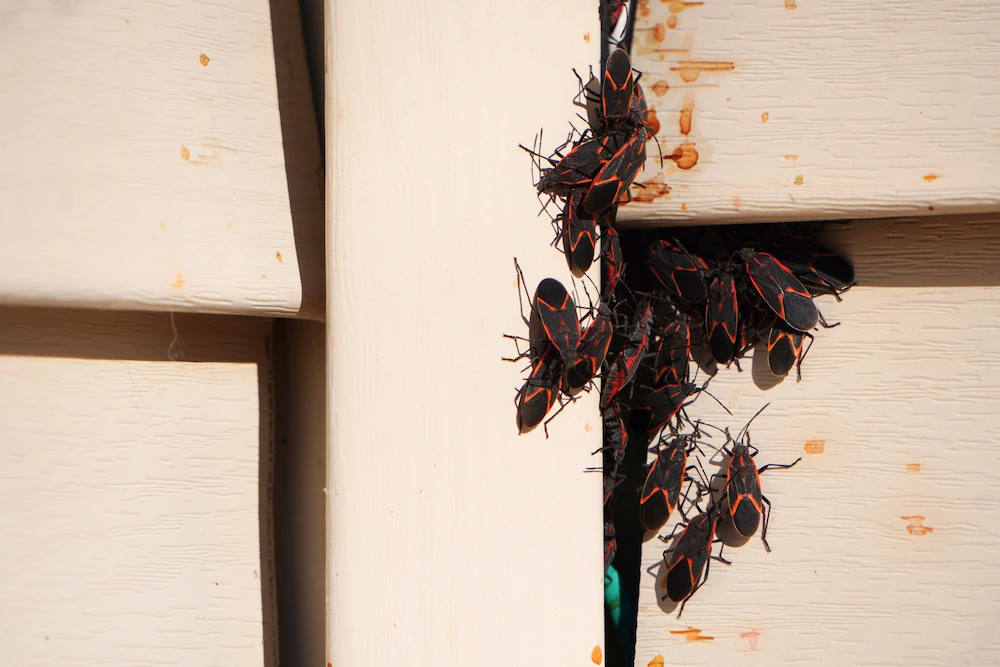
Insects are cold-blooded, so their body temperature follows whatever is around them. When fall nights around Chicagoland turn chilly, a beetle or fly that spent the night in a tree or a leaf pile is sluggish by morning. It needs outside heat to get moving again, and a wall that has been soaking up sun for a few hours is far warmer than the air around it.
That is why the activity tends to peak on bright afternoons that follow a cold night, and why it concentrates on the south and west sides of a house. Those walls catch the most direct sun once the sun sits lower in the sky, and brick, stone, and dark trim hold that warmth into the evening. A shaded north wall a few feet away can be nearly bug-free while the opposite side looks like it is moving.
Color plays a part too. Asian lady beetles, the orange ladybug look-alikes that show up on so many homes in October, are known to be drawn to light-colored, sunlit surfaces and to features that stand out against them, such as contrasting trim or the edge of a window frame. A pale house on an open lot can get hit noticeably harder than a darker one tucked under shade trees.
The Usual Crowd on Chicagoland Siding
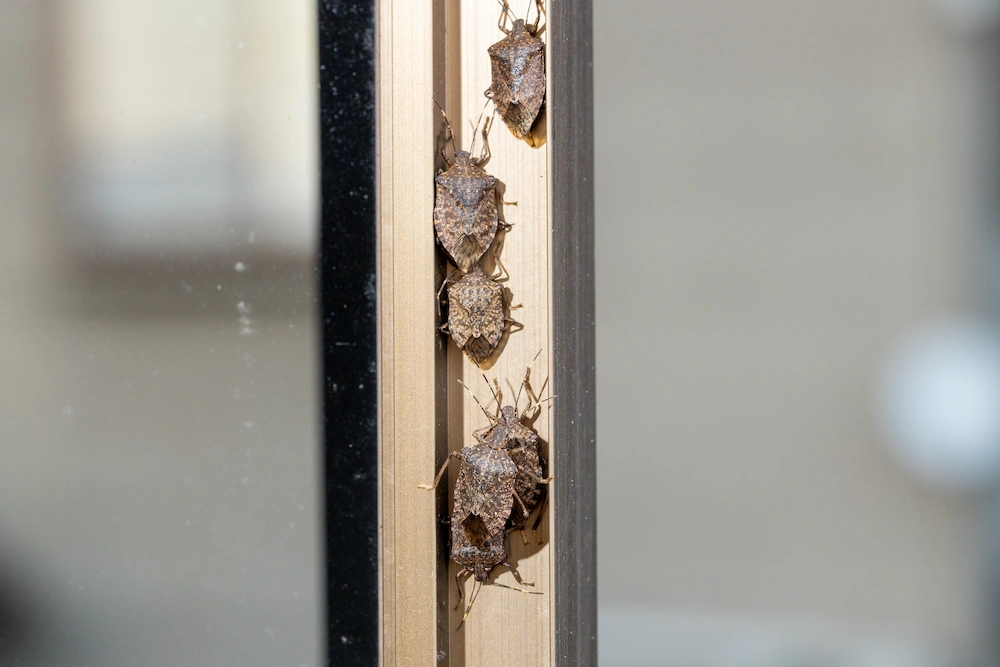
A handful of species account for most of what homeowners see. Asian lady beetles are often the biggest group, and they can leave yellowish stains and a sharp odor when disturbed. Boxelder bugs, black with red-orange markings, are especially common near boxelder and maple trees. Brown marmorated stink bugs are slower and shield-shaped, while cluster flies look like slightly sluggish houseflies that gather around upper windows and attic vents.
None of these insects feed on your house or damage its structure. Lady beetles can give a mild pinch now and then, but the real complaints are the sheer numbers and the mess they leave behind.
What They Really Want Is a Place to Wait Out Winter
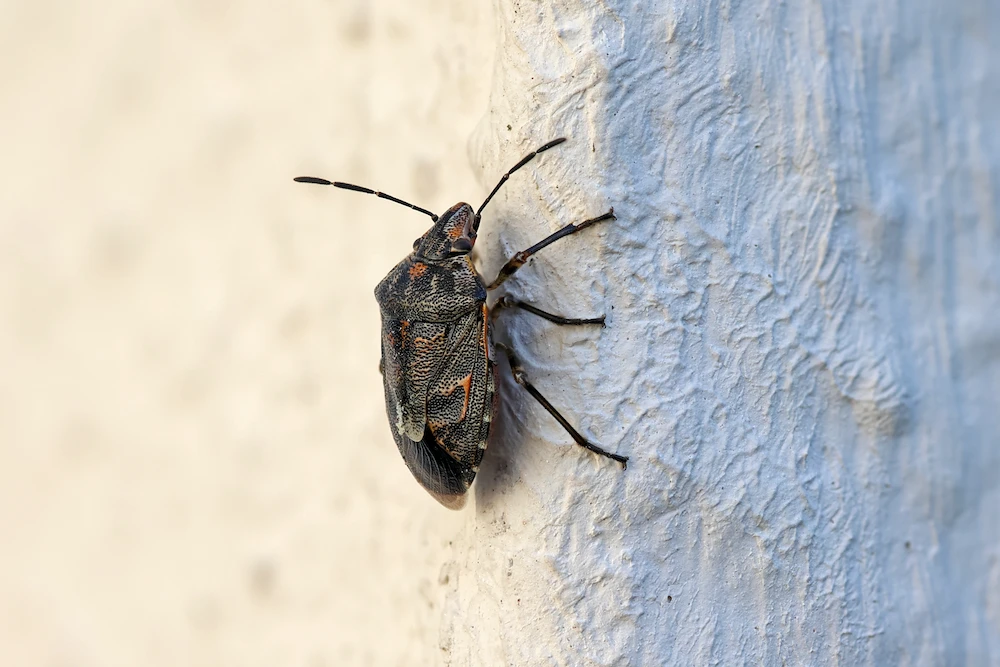
Warming up is only half of it. As days shorten in late summer, many insects shift into an overwintering mode, a kind of dormancy where they stop breeding and look for a protected spot to sit still until spring. In the wild, that might be loose tree bark or a crack in a rock outcrop. A house offers far more of those spaces, and most of them are better insulated than anything in a forest preserve.
Once they have warmed up on the wall, the insects start probing. They crawl into the overlaps of vinyl or wood siding, behind loose window trim, under fascia boards, through torn screens, and around the gaps where cable, gas, and dryer lines pass through. Openings that look far too small to matter are plenty big for a lady beetle or a cluster fly. Some settle right behind the siding, and others keep moving until they reach wall voids or the attic.
There is also a reason the same houses seem to get mobbed year after year. Several of these insects respond to chemical cues, and lady beetles in particular appear to be drawn back to sites where earlier groups gathered. Once a few have settled in a spot, more tend to follow, which is how a handful of beetles on Monday can turn into a crowd by the weekend.
Surroundings matter as well. Homes next to open fields, wooded lots, or the river corridor along the Fox River in Geneva and St. Charles tend to see more of this, simply because there is more habitat feeding insects toward the nearest warm, tall structure. Newer subdivisions on former farmland can see heavy numbers too, especially where the house is the tallest, sunniest thing around.
Making Your Home a Worse Place to Spend the Winter
Timing matters more than anything with these pests. Once they are behind the siding or inside a wall, there is not much you can reach, so the work that helps most happens before the big gatherings, ideally in late summer or the first stretch of cool weather. If you are reading this with bugs already on the wall, it is still worth doing. You will just be closing the door on the stragglers instead of the whole crowd.
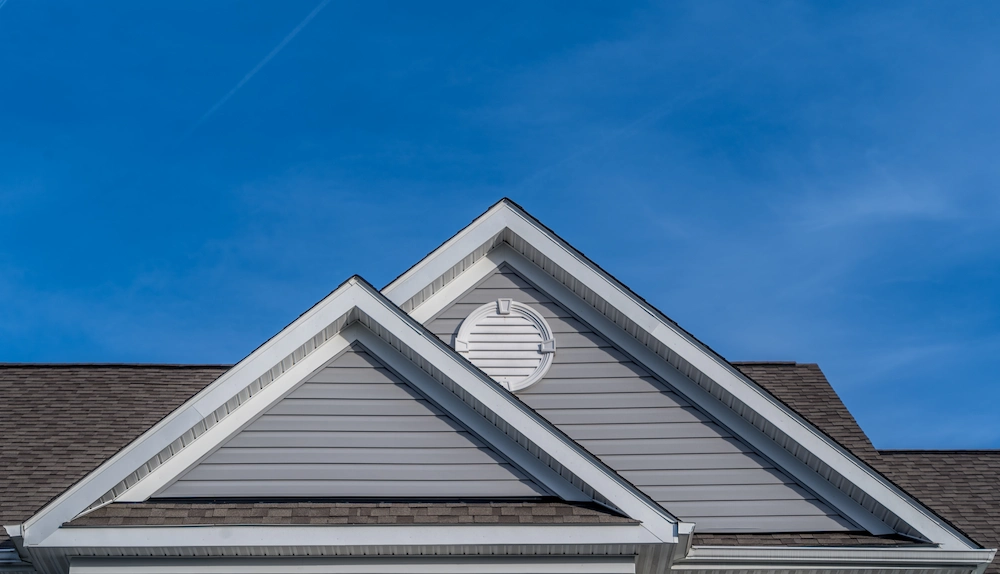
Most people check around the foundation, but many fall invaders head up, not down. Lady beetles and cluster flies tend to work toward the highest warm spots on a house, so the gaps that matter most are often around upper-story windows, soffits, gable vents, and the seam where the roofline meets the siding. A slow walk around the house on a sunny afternoon, with binoculars if you have them, will show you where they are congregating, and those spots are usually right next to the openings they are using.
Sealing is the main event, but it is rarely perfect on a home with years of settling behind it. That is where an exterior treatment timed for early fall can help reduce how many insects settle in. Pointe’s general pest control services focus on the entry points around the outside of the home, along with eaves, garages, and sheds, and regular quarterly visits keep that protection going from one season to the next.
Why They Turn Up Indoors in January
Here is the part that confuses a lot of homeowners. You can seal up in October, see nothing for weeks, and then find lady beetles crawling on a bedroom window during a mild spell in January. Those are almost always insects that got into the walls or attic back in the fall. A warm day, or heat from the furnace drifting into a wall void, wakes them up, and they wander toward light, which usually leads them into the living space rather than back outside.
They are not breeding in there, and a few dozen on the windows does not mean a new infestation has started. Vacuum them up with a bag or canister you can empty outdoors instead of squashing them, since crushed stink bugs and lady beetles leave odor and stains behind. Then make a note of where they keep appearing, because that window or light fixture is often a clue to the gap they used.
Close the Gaps Before Next Fall’s Warm Afternoons
So why do bugs gather on my house in the fall? It comes down to warmth and shelter. Shorter days push insects to find a winter hideout, sunny siding gives them a place to warm up while they search, and every unsealed gap invites them to stay. Blocking those openings, especially up high, and cleaning up stragglers without crushing them can go a long way toward a quieter winter.
If your siding is already covered, or the same upstairs windows fill with beetles every year, the Geneva pest control team at Pointe can look over the outside of your home and find where they are getting in. A visit now can help you get ahead of it before the sunny-wall crowd comes back next year. Contact us for a free quote on our effective year-round services!
Citations
What bugs are most active in fall?. (2022, November 18). Maggie’s Farm. Retrieved October 14, 2026, from https://maggiesfarmproducts.com/blogs/bug-help/bugs-active-in-fall
Request a Free Quote Today
(We do not share your data with anybody, and only use it for its intended purpose)
