How House Flies Contaminate Everything They Touch
How House Flies Contaminate Everything They Touch
Summary: House flies spread bacteria after living in garbage dumps, feces, and organic decay. This blog explains how house flies contaminate surfaces and food items with their microbes and how Illinois homeowners can prevent them.
Few things are more annoying than a house fly buzzing around your head and trying to land on your plate of fresh food. There’s no doubt that a fly infestation is frustrating, but these flies also happen to be one of the filthiest pests alive. According to EBSCO, house flies carry over 65 infectious diseases!
Let’s back up for a second. How do house flies contaminate food and transmit so many dangerous illnesses? In some ways, they intentionally contaminate surfaces with their vomit and droppings (yes, we’re going there). In other ways, flies infect surfaces without even trying.
So, let’s learn more about the foul world of house flies and how their habitat choices create problems for anyone who comes in contact with them.
Flies Live in Gross Places
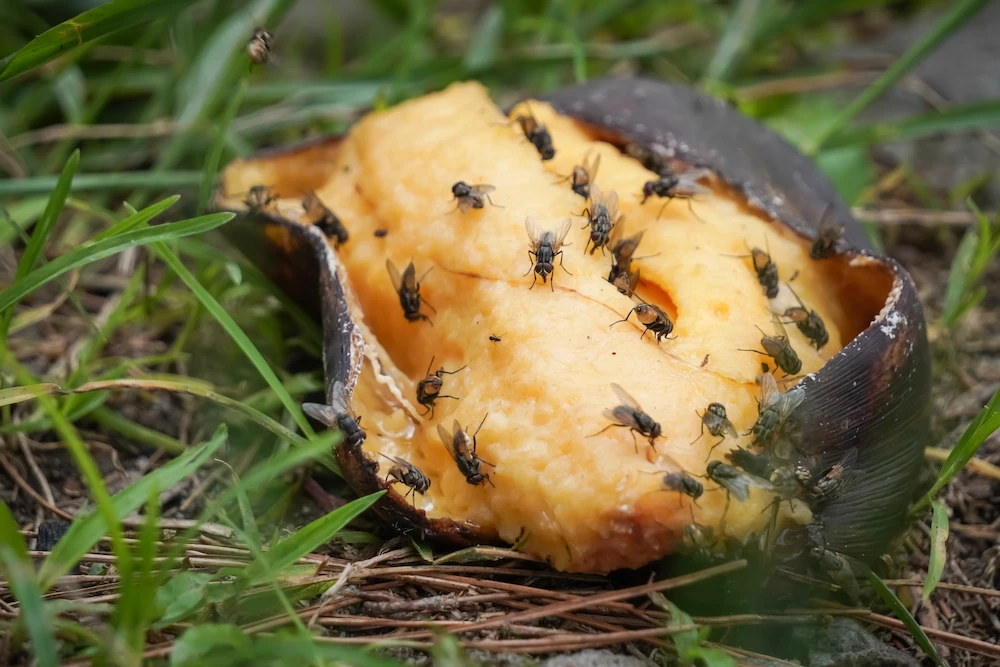
When most people think of house flies, they think of the disgusting places that these pests frequent. It’s not a coincidence that flies are often seen buzzing around garbage, animal feces, sewage, and rotten food. In fact, they seek these unsightly places out for their families!
You see, house flies want to lay their eggs in bacteria-ridden locations because these spaces have the most food sources. Flies prefer liquids or soft foods, and they need to lay their eggs in these items to provide their offspring with immediate nutrients.
Flies are worse in warm weather because the higher temperatures give them energy, like any insect. They’re also able to find more food now than in winter when everything is hard and frozen. While house flies generally love sweets, males want carbs, and females want carbs and protein because of their eggs.
House flies need to walk on surfaces because their taste neurons are on their grimy little feet. If you see a fly walking on a piece of fruit and intermittently rubbing its feet together, it’s tasting the fruit and cleaning its receptors to get the full experience.
The House Fly Life Cycle is at the Center
Female house flies can lay several egg clutches after mating once. When it’s time to lay eggs, they look for a warm area with damp, organic material. Whether they’re in trash, feces, or another gross item, the eggs will hatch within 24 hours. The larvae are white maggots that need bacteria in order to complete their phases before becoming pupae.
Once they’re ready, the older maggots crawl to a safe spot and create cocoons to live in while they grow into adult flies. In less than a week, the new flies will fly 1 to 2 miles away from their original home to find food and a new disgusting habitat for their own eggs.
If the “food” they find isn’t liquid enough for their mouth parts, house flies vomit digestive enzymes onto the organic matter and drink it all up once it’s a liquid (enjoy that visual!). When they walk and vomit on our fresh food after walking all over a garbage dump, it’s no wonder how they spread these harmful pathogens.
The Hidden World of Microbes
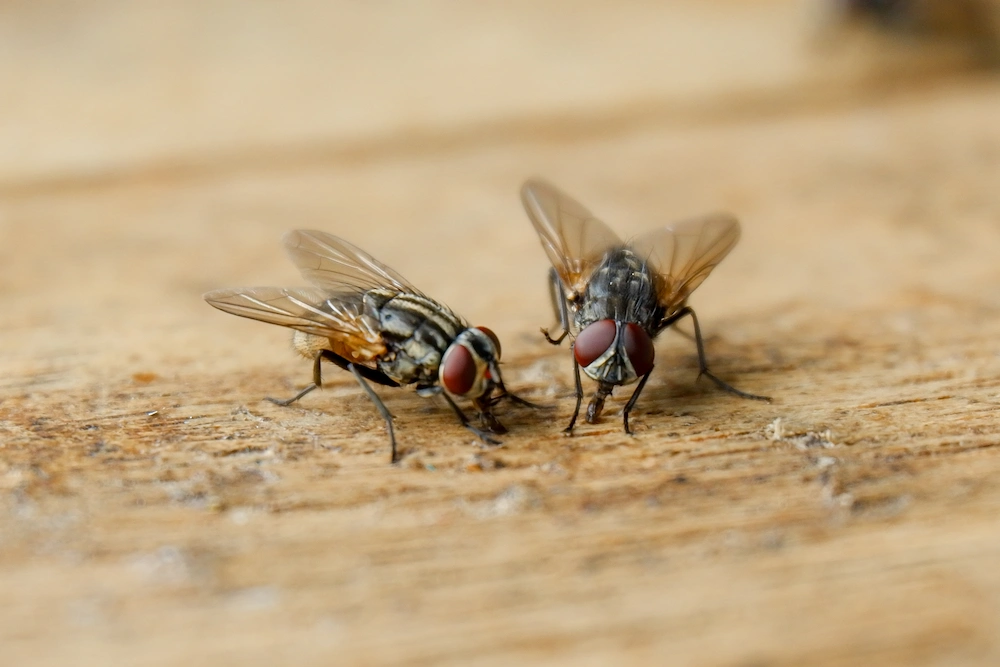
As they walk on and eat gross organic matter, house flies collect microbes on their legs, wings, mouthparts, and microscopic hairs. These microbes can live in their digestive systems and salivary glands for days, so flies are able to transmit these pathogens anywhere they go.
Microbes are small organisms that include bacteria, fungi, viruses, and protozoans. In other words, these are basically the germs that house flies carry and transmit to us. Female flies have more microbes because they choose from a wider variety of food and habitats.
Microbes need time to grow and make illness-causing toxins. The longer that a house fly is on a surface, the more microbes they can transfer. A house fly infestation means there are likely more microbes since there’s a higher concentration of contaminated flies feeding and laying eggs.
How Microbes Can Lead to Illness
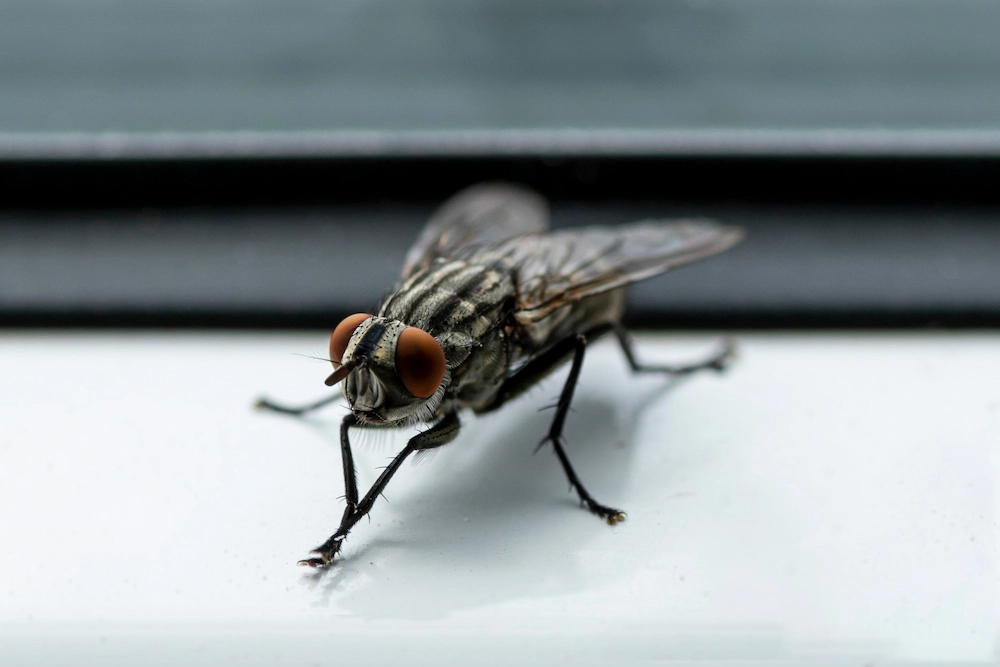
Flies (and other pests) create health concerns by spreading microbes everywhere they go. This is why pest activity is treated so seriously in the food service industry, as it doesn’t take much to contaminate a lot of food. Pointe’s commercial pest solutions keep these spaces clean and compliant with industry standards for this very reason.
But back to flies. There are three main tools that they use to unintentionally spread microbes: their droppings, their vomit, and their bodies. Flies defecate on everything and vomit those digestive enzymes on their food, so these bio-materials spread the microbes that live inside their bodies.
As for the outside of their bodies, the ample bacteria stays on their feet and therefore continues to spread as they move. While flies are walking on an organic item and deciding whether they can eat it, they’re spreading those microbes with every step!
House flies in urban settings often carry more pathogens than in rural areas. Big cities have denser populations, which means more trash and more microbes. There are many other factors that contribute to how microbes from flies lead to illness, including the type of microbe and the amount of time that the fly spent on a surface.
A fly landing on your hand for two seconds won’t make you sick. However, eating or drinking items that were touched by the fly might. All those pathogens from the garbage dump they previously visited are then transferred to their next location, especially if they feed or defecate there.
The diseases commonly transmitted by house flies include:
- Salmonella
- Food poisoning
- Cholera
- Typhoid
- Dysentery
- Tuberculosis
Prevent House Flies with Proper Sanitation
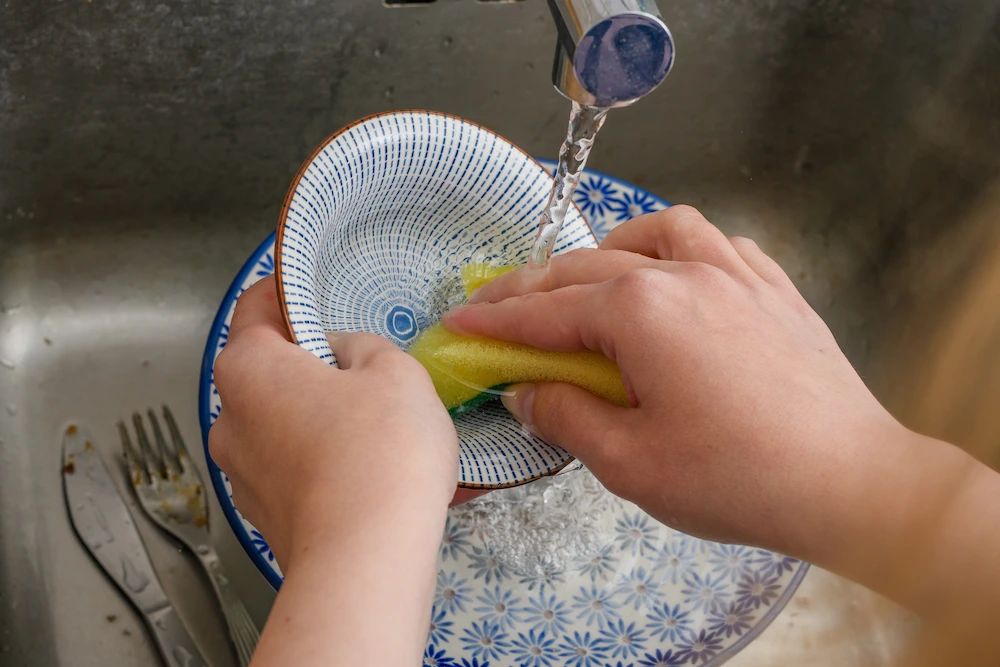
Sanitation is the easiest way to prevent house flies in the house. If everything is clean and they don’t have any attractants, they’re less inclined to invade a home.
These are our top fly prevention tips for every season:
- Have great trash management: For indoor trash cans, use bins with lids or keep them in lower cabinets. Line them with strong garbage bags and take out the trash once full. For outdoor trash cans, keep the lids closed and the cans as clean as possible.
- Ensure all screens are in tact: Check each window and door screen for new gaps that could let bugs inside. Replace loose or torn screens with new mesh, and keep the screens tightly closed when those windows and doors are open.
- Keep a clean kitchen: Wipe the counters with an antibacterial wipe or spray every night. Make sure all dirty dishes are put in the sink and not left throughout the house. Clean all food and drink spills immediately.
- Store food properly: Store pantry staples, like baking ingredients and cereal, in airtight containers. Check cans and boxes for leaks, and dispose of any that are found. When serving food at an outdoor party, keep dishes covered between servings.
- Clean the drains: Run the garbage disposal regularly. Wipe down the sink with an antibacterial cleaner or a designated sink cleaner. All dirty dishes should be washed or loaded into the dishwasher within 24 hours.
- Inspect for new fly activity: Check your home often for new egg sites or fly activity. If you notice a lot of flies in one area, try to find the attractant that’s drawing them there and dispose of it. Call in the Pointe pros for efficient service.
Keep it Squeaky Clean with Pointe!

Those sanitary tasks are great practices to adopt, but professional attention is still essential for long-term control. Advanced treatments and exclusion work help reduce the fly population around your home, even when their activity spikes during the warmer months.
If you dread battling that annual infestation, avoid the stress with Pointe Pest Control’s general services! Our local pest experts provide personalized solutions after taking the time to assess each situation and determine the best course of action. Our goal is always long-term prevention, not temporary removal.
Protect your home from these disgusting pests and contact us for a free quote on our reliable services today!
Citations
Lius, A. (Dr.). (2025, November 6). What happens when a fly lands on your food?. The Scientist. Available at https://www.the-scientist.com/sterility-in-three-hours-without-the-cutoff-compromise-74464 (Accessed on September 21, 2026).
Swayne, M. (2017, December 21). Flies’ disease-carrying potential may be greater than thought, researchers say. Penn State: Research. Available at https://www.psu.edu/news/research/story/flies-disease-carrying-potential-may-be-greater-thought-researchers-say (Accessed on September 21, 2026).
The house fly and other filth flies. (n.d.). Illinois Department of Public Health: Prevention & Control. Retrieved September 21, 2026, from https://www.idph.state.il.us/envhealth/pcfilthflies.htm
Request a Free Quote Today
(We do not share your data with anybody, and only use it for its intended purpose)
