
The Norway Rat: Chicago’s Infamous Rat
The Norway Rat: Chicago’s Infamous Rat
Summary: A Chicago-focused guide to the Norway rat’s habits and lifecycle, where they hide, what signs to watch for, and practical prevention and control steps.
Chicago has a way of feeding legends. Deep dish, lake-effect winters, and yes, rats that seem to treat every alley and basement like a personal runway. When customers call about scratching in the walls or a trash area that suddenly looks torn apart, the usual culprit is the Norway rat. If you need help fast, start with rodent control services in Chicago so the problem gets addressed at the source.
If you want to stop them, it helps to understand them. Below is a practical look at how they live, what makes them so successful in the city, and what to do when your home or business starts showing signs of activity.
Meet Chicago’s Most Persistent Rodent

This rat is also called the brown rat, sewer rat, or street rat. It is bigger and stockier than the roof rat, with a blunt nose, smaller ears, and a tail that is usually shorter than its body. In neighborhoods where food waste and shelter are easy to find, this species tends to win the competition.
People often talk about the Chicago rat problem like it is one single issue, but it is really a mix of conditions. Dense buildings, shared walls, aging utility lines, and constant food sources create the perfect setup for rodents to keep relocating from block to block.
Another reason this species dominates is adaptability. It can live under a sidewalk slab, behind a restaurant dumpster, or in a basement storage room. As long as it can stay hidden and find calories, it will settle in and start building a routine.
Where They Hide in the City

They prefer to stay close to ground level, especially where they can move unseen. In Chicago, that often means burrows along foundations, gaps under stoops, dense landscaping near basements, and voids around utility penetrations. They also take advantage of sewers and connected infrastructure to travel between properties.
Burrowing is a major clue. If you notice fresh soil near a foundation, a disturbed mulch line, or holes tucked under a sidewalk edge, you may be looking at an active tunnel system. These burrows often have multiple exits, which makes the colony harder to eliminate if you only treat one spot.
Inside a structure, they follow edges and protected routes. Think along pipes, behind stored items, and under appliances. If you spot rub marks along baseboards or a trail through clutter, you are seeing their commute, and that is where monitoring and trapping typically work best.
Feeding, Nesting, and Daily Routines
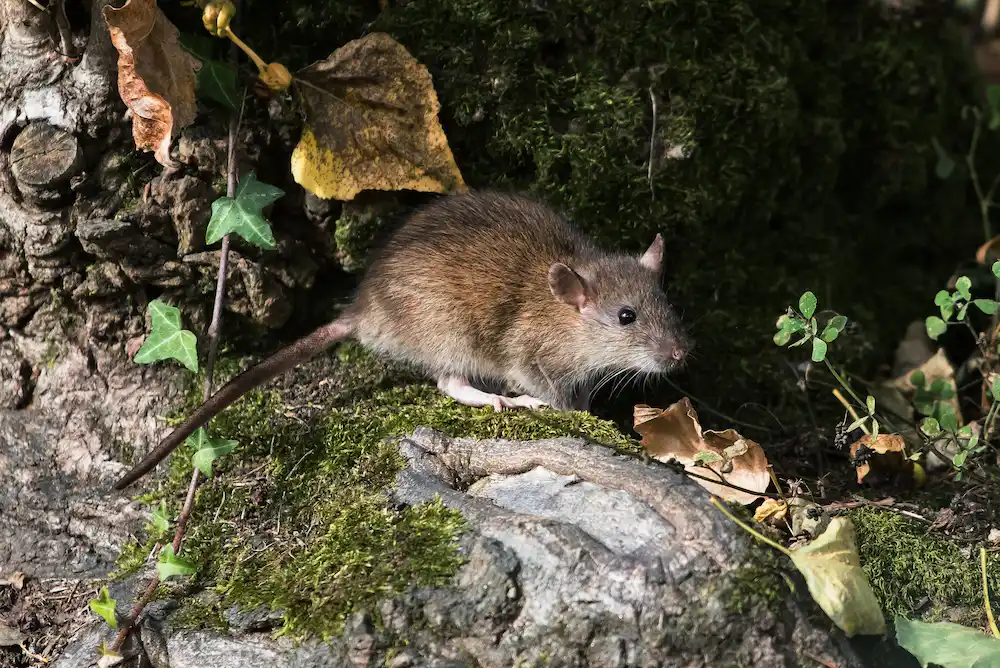
These rats are opportunistic omnivores, but they have favorites. Grease, pet food, bird seed, and unsecured trash are high-value targets, especially in winter. If food is consistent, they will keep returning to the same spot until it feels like part of their territory.
Their nesting choices are all about warmth and cover. Insulation, cardboard, fabric, and even shredded paper can turn into bedding. Basements, crawl spaces, utility rooms, and cluttered storage areas are common nesting zones because they stay quiet and are rarely disturbed.
When people ask about Norway rat habits, the short answer is that they are built for stealth. They are most active at night, they tend to hug walls, and they prefer predictable routes. That is why you might smell them or find droppings long before you ever see one.
What Brown Rat Behavior Looks Like Indoors
One frustrating trait is their caution around new objects. A trap placed in the open might get ignored at first, even if bait looks appealing. Successful setups usually place devices along travel paths, in tight spaces, and near rub marks where the animal already feels protected.
Brown rat behavior also includes constant gnawing. Teeth never stop growing, so they chew wood, plastic, and even softer metals. Beyond the mess, gnawing can damage wiring and stored goods, which is why early intervention is so important.
Why Infestations Grow Fast
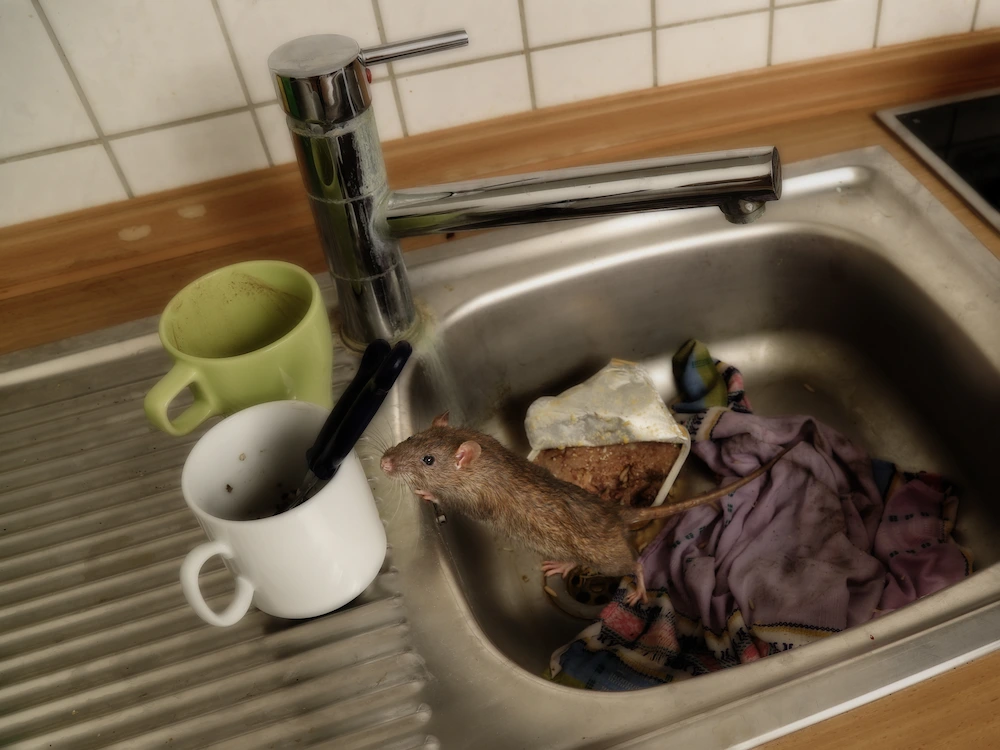
The Norway rat lifecycle moves quickly once shelter and food are steady. A female can have multiple litters per year, and pups mature fast, which turns a small problem into a big one in a matter of weeks. That rapid growth is why early action matters.
The stages move fast. Newborns stay in the nest, then become active juveniles that start exploring food sources. Once a colony has a stable route to trash, pet food, or a pantry area, the next generation is already learning the same pathways.
Even when a location feels quiet, colonies can persist nearby and expand when conditions change. Construction, weather swings, and shifting trash routines can push them into new buildings without much warning.
Warning Signs You Should Not Ignore
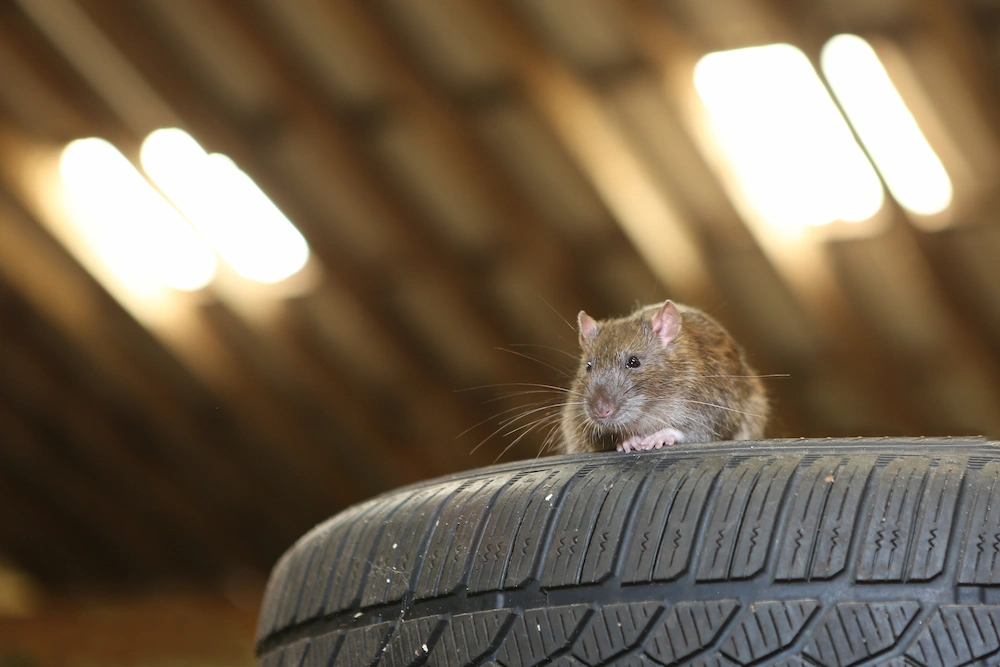
Most people do not see a rat first. They see the evidence. If you know what to look for, you can catch activity before it becomes a full-blown infestation that spreads through walls, attics, or shared utility lines.
Here are the most common Norway rat infestation signs to watch for around your property:
- Droppings along baseboards, behind appliances, or near storage areas
- Gnaw marks on wood, plastic, or food packaging
- Grease rub marks on walls or pipes where rats squeeze through
- Burrow openings in soil near foundations or under sheds
- Nighttime sounds like scratching, squeaking, or thumping in voids
If you notice one sign once, it may be a one-off. If you notice multiple signs or you see them repeating in the same areas, treat it like active activity and not a random visitor.
What Actually Helps in Chicago Homes and Businesses
Basic sanitation and exclusion do a lot, but they have to be consistent. Seal gaps, tighten trash routines, and remove easy nesting materials, especially in basements, garages, and storage areas. Focus on the areas where activity repeats, not just where you last noticed a sound.
Practical steps that make the biggest difference:
- Reduce food access by securing trash, pet food, and bird seed
- Block entry points with durable materials, not temporary foam alone
- Remove clutter so rats have fewer hidden travel lanes
- Use targeted trapping and monitoring along active routes
- Follow up, because one service rarely fixes a long-running issue
DIY efforts often fail when they only treat what is visible. A colony can be active in a wall void or under a slab while the surface area looks clean. If you keep seeing droppings after cleaning or you smell a strong ammonia-like odor, the problem is likely established.
When the situation keeps coming back, professional inspection helps you find the real entry points and the hidden nesting zones. If you are looking for broader help beyond rodents, our team also provides pest control in Chicago for homes and businesses throughout the city and nearby suburbs.
Conclusion
Rats thrive where there is shelter, food, and a path that keeps them hidden. Take away any one of those, and you make the property harder to live in. Take away all three, and the colony usually moves on or collapses.
If you suspect an active infestation, do not wait for a daytime sighting to confirm it. Pointe acts quickly to end rodent problems before they turn into full-fledged nightmares. Early action protects your wiring, insulation, stored goods, and peace of mind.
Citations
Norway rat. (n.d.). University of Illinois Urbana-Champaign: Illinois Extension – Invasives. Retrieved January 8, 2026, from https://extension.illinois.edu/invasives/norway-rat
Request a Free Quote Today
(We do not share your data with anybody, and only use it for its intended purpose)
