
How to Check for Bed Bugs in Beds and Beyond
How to Check for Bed Bugs in Beds and Beyond
Summary: Bed bugs don’t just hide in beds—they lurk in couches, curtains, outlets, and more. This guide walks Illinois homeowners through the signs, inspection steps, and prevention tips to spot bed bugs early and know when to call Pointe Pest Control.
When you locate a bed bug problem early, you save yourself a lot of time, money, and sleepless nights. Despite their name, bed bugs don’t just live in beds. They just like to be anywhere near humans, whether it’s in upholstered furniture or under an idle pile of dirty laundry. Inspecting your home for bed bugs doesn’t have to be a hassle, especially when you have our handy guide!
Let’s learn how to thoroughly inspect your home and catch bed bug issues before they spread.
Your Bed Bug Inspection Kit
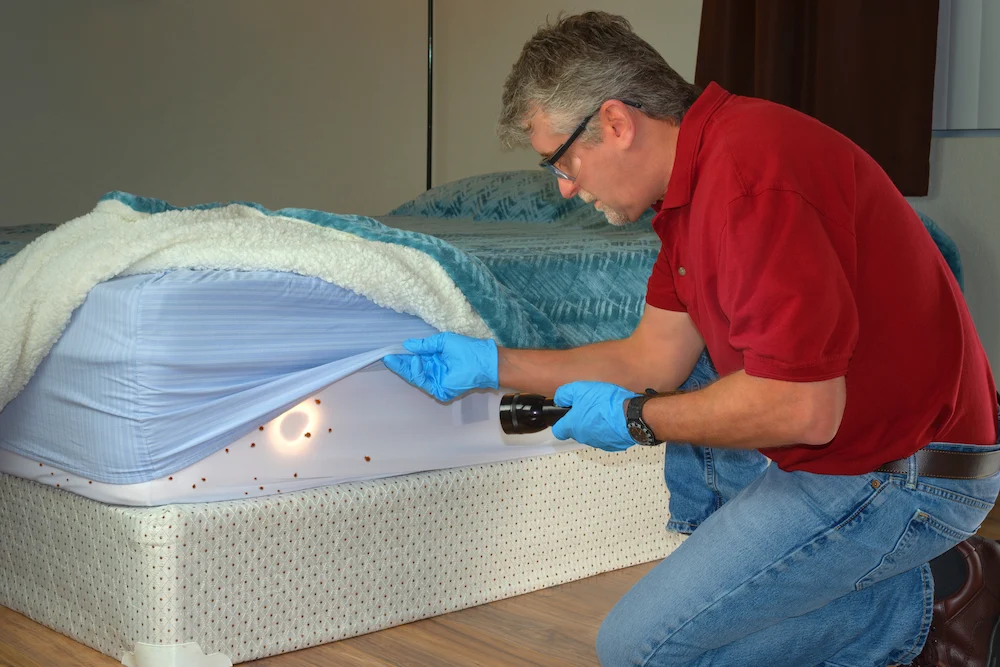
Anyone who’s a fan of DIY projects will be the first to tell you that a good kit is essential. Well, inspecting your home for bed bugs is no different! We suggest equipping yourself with these items before you begin:
- A bright flashlight or headlamp
- A thin card, like an old credit card (to run along seams and into cracks)
- A lint roller or clear packing tape for samples
- A white sheet or tray for seeing if items are infested
- A screwdriver
- Zip‑top bags
- Gloves
Know the Signs
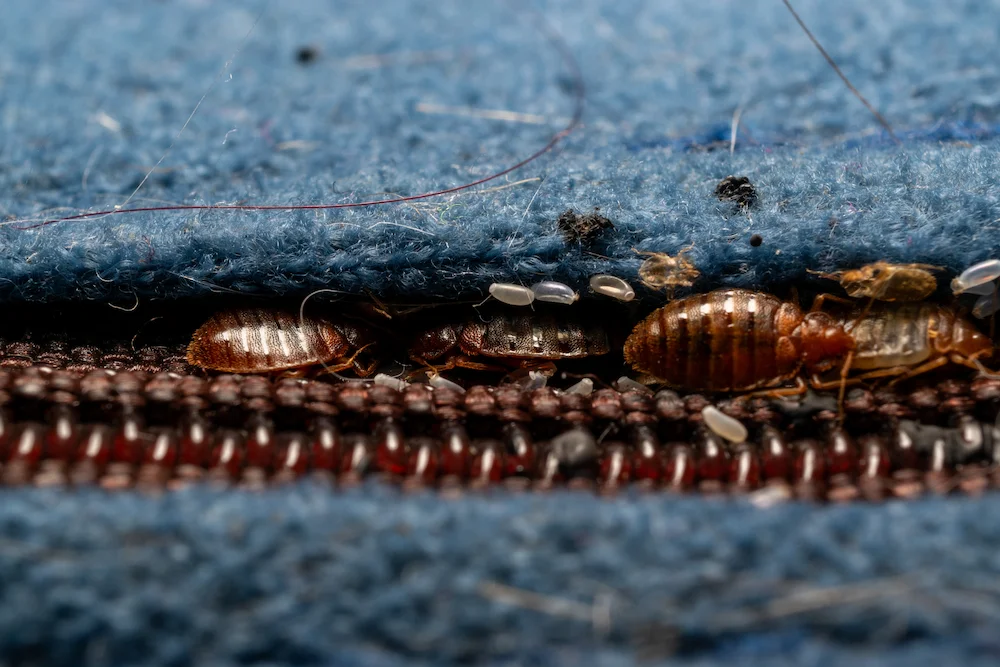
Bed bugs and their evidence are small, so take your time while inspecting your home. The devil (or bed bugs) is in the details. Of course, this is much easier when you know what to look for when you’re peering at your belongings. The common signs of a bed bug problem include:
- Live bugs: Either apple‑seed‑shaped, reddish-brown adults or pin‑sized, pale nymphs.
- Droppings: Tiny black dots or streaks that look like marker smears on fabric or wood.
- Cast skins (or husks): Papery, tan shells left behind as nymphs molt.
- Eggs and eggshells: Pearly white eggs that are about 1 mm and often stuck in seams or crevices.
- Musty sweet odor: Usually only present in major infestations.
- Red bites: New bites in a line or cluster on exposed skin. Bug bites aren’t enough to determine that bed bugs are the issue without other evidence.
Starting With The Bedroom
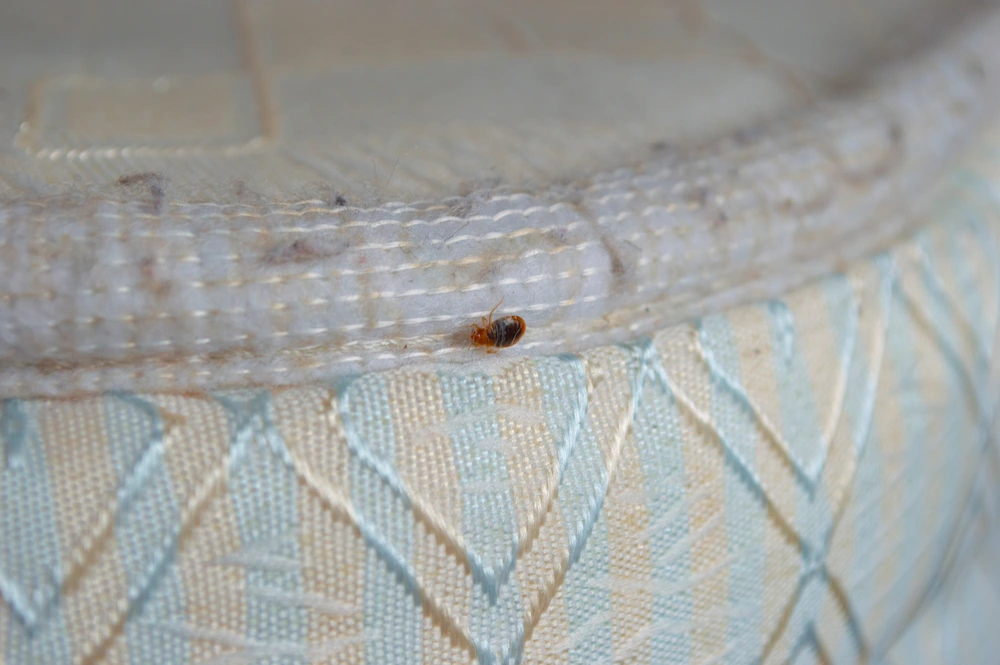
Like we said earlier, bed bugs aren’t confined to the bedroom. But their name isn’t a mistake, so it’s a good idea to start your inspection in the likely place of origin. These are the areas we recommend searching:
- Bedding – Inspect sheets, blankets, quilts, and pillowcases for rust‑colored smears or black specks. Shake items over a white sheet to see if any bugs or eggs fall out. If you want to take it a step further, wash and dry your bedding on high heat since heat kills bed bugs.
- Mattress & box spring – Using a card to scrape along the edges, check the piping, tufts, labels, and handles. Flip the mattress and scan the underside, then inspect the dust cover underneath the box spring.
- Headboard & bed frame – Look behind and along screw holes, joints, slats, and where the headboard meets the wall. If possible, remove the headboard to inspect the mounting points.
- Bedside furniture – Examine your nightstand’s drawer joints, screw holes, and the spaces underneath each drawer. Pull the drawers out and check the runners.
- Walls & flooring – Check along baseboards, near carpet edges, and behind wall hangings and peeling wallpaper.
- Electrical & low‑profile spots – Carefully remove outlet and light‑switch covers (turn the power off first if you choose to do this) and check the voids.
The House’s Other Hotspots

Once your bedrooms are secure, it’s time to turn your attention to the rest of the house. You don’t have to tear every room apart in search of hidden bed bugs – unless you’re looking for an afternoon project – but pay close attention to the items you do inspect. These are the places we suggest focusing on:
- Living room seating: Inspect couches, recliners, futons, and chairs. Pay close attention to the seams, folds, and frame. Make sure to lift the cushions and check underneath.
- Curtains and drapes: Look along the pleats, hems, and header rail for hidden bugs.
- Office and gaming chairs: Scan along the seams, in mesh backings, and under armrests.
- Closets and laundry areas: Check hampers, laundry baskets, backpacks, luggage, purses, and dirty laundry piles.
- Entryways and mudrooms: Inspect the crevices and seams on shoe racks, gym bags, containers, and pet bedding.
- Vehicles: Check the seams and seat rail crevices of each car seat, and lift up floor mats to inspect underneath.
- Shared walls (in apartments and dorms): Inspect adjoining walls along the baseboards and outlets, as bed bugs can travel through gaps.
A Note on Secondhand Furniture

Thrifted or secondhand finds are great, but make sure you’re not accidentally bringing home any bed bugs! These pests can go a year without food, so older items that were exposed to an infestation can still harbor bugs. This is why we strongly discourage bringing curbside furniture finds (especially upholstered items) inside.
Before you bring that vintage chair or handmade end table home from the thrift store, give it a thorough inspection on site. Check every seam, joint, crevice, and underside. If you see black specks, eggs, husks, or live bugs, alert the staff and do not bring it home.
Slow the Spread While You Investigate

Thankfully, there are easy ways to slow the spread of present bed bugs and prevent them from infesting:
- Store loose items (papers, seasonal clothing and decor, etc.) off the ground and in lidded containers.
- Place interceptors under each leg of the bed that you suspect has bed bugs, and keep the bedding off the floor.
- Wash and dry bedding and heat‑safe clothing on high heat to kill all life stages of bed bugs.
- Vacuum slowly along the seams and edges of furniture, carpets, and rugs. Empty the canister into a sealed bag and dispose of it in the outdoor garbage can.
- After traveling, unpack your suitcase directly into the washer and launder the clothes immediately. Inspect luggage seams and store the suitcases away from sleeping areas.
When to Call a Professional
DIY inspections can help you find problem areas, but bed bugs spread quickly and resist store‑bought treatments. If you find multiple signs of an infestation – especially live bugs – schedule a professional inspection with Pointe Pest Control ASAP.
Pointe’s team serves West Chicago and surrounding Illinois communities with targeted treatments and ongoing monitoring to make sure the problem is fully solved.
Learn more about our Bed Bug Control Services or request help from our Naperville, IL bed bug team today!
Need help now? Call (888) 570‑0512 to get started.
Citations
Miller, D.M. (n.d.). How to identify a bed bug infestation. The Virginia Department of Agriculture and Consumer Services. Available at https://www.vdacs.virginia.gov/pdf/bb-identify1.pdf (Accessed on September 29, 2025).
Request a Free Quote Today
(We do not share your data with anybody, and only use it for its intended purpose)
