
5 Fun Hornet Facts
5 Fun Hornet Facts
1. Hornets Are Actually Wasps
Turns out, while we often think of them as two different creatures, hornets are actually just a type of wasp. According to taxonomy, which is the scientific identification and classification of organisms through the use of hierarchical categories, hornets are insects in the Hymenoptera order, Vespidae family, and genus Vespa. Vespidae encompasses roughly 30,000 different species of wasps, 20 of which are different kinds of hornets. 
2. Lower Levels of Aggression
Hornets are actually known for being one of the most laid-back types of wasps that you may encounter. They aren’t inherently aggressive, nor are they very territorial and outside of their nests, hornets are rather passive insects. However, if their nest is disturbed or they feel threatened by your actions or extreme proximity to their colony, hornets can attack with unrelenting force. As such, it is important to steer clear of any nests you can see and leave the nest removal to pest control professionals. 
3. Giant Nests
Hornets’ nests are much larger than those of paper wasps and are often shaped like a large football. The outer walls of the nest appear smooth and overlap one another with openings at various heights along these structures, creating caverns into the nest. Typically, they construct these large nests on trees, along the siding of a home, or even under the eaves of your roof. 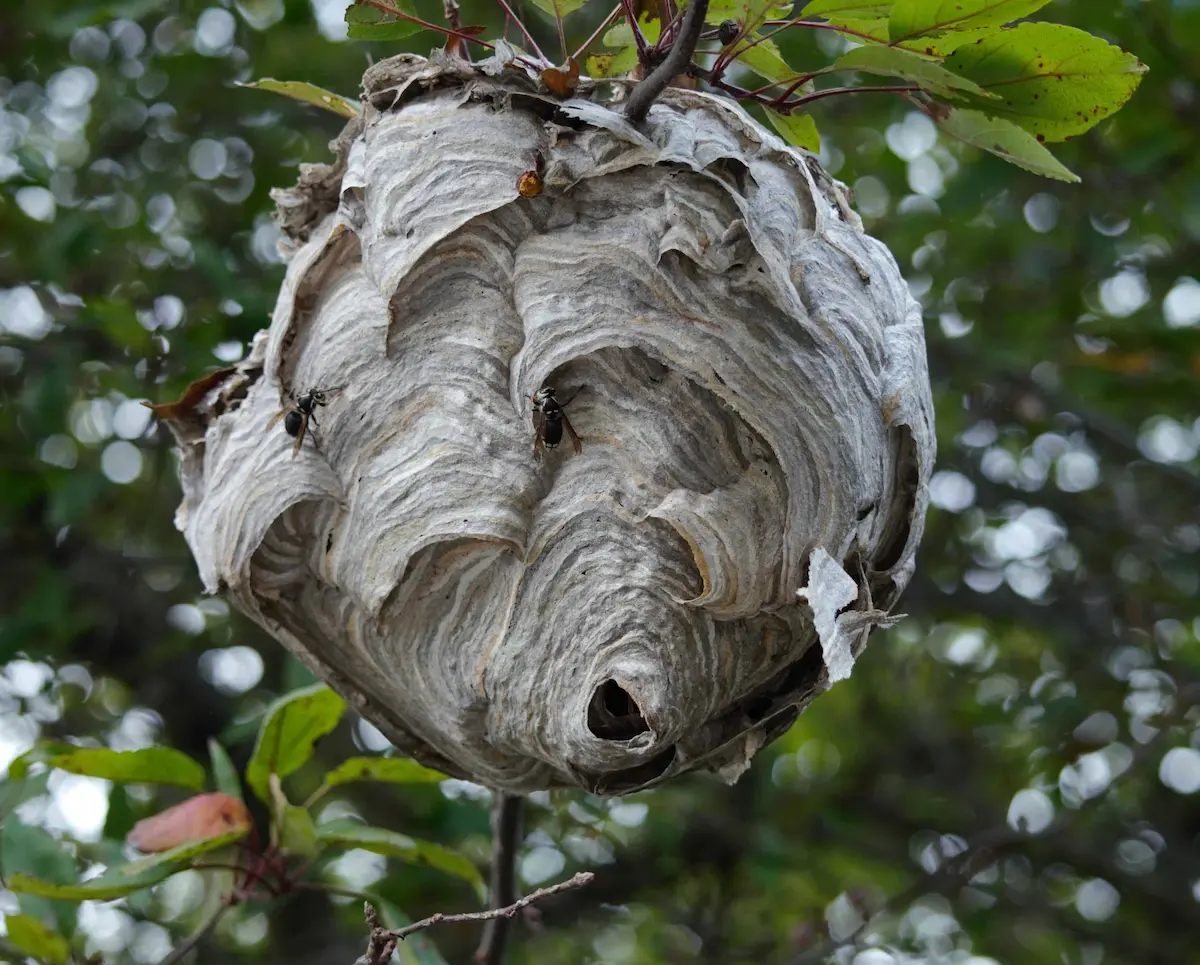
4. Hornets as a Form of Pest Control?
While they’re pests in their own right, these little striped stingers can also be massively helpful controlling other pests. Both adults and larvae consume a variety of insects and arachnids along with sap, fruit, and nectar. Unfortunately, due to their taste for both sweet things and insects, hornets will occasionally raid honeybee hives, stealing the honey and killing the inhabitants. Due to their larger size and strength in comparison to honeybees, it can take only a few hornets to cause massive devastation. With our dwindling numbers of honeybees currently, this is definitely a downside to their natural “pest-controlling” behaviors. 
5. A Size to Be Reckoned With
Hornets are generally the largest of all the different kinds of Vespidae. The largest of all hornets is the Giant Asian Hornet, also known as by the newly coined term “Murder Hornets.” These excessively large insects can measure in up to a surprisingly 2 inches in length. 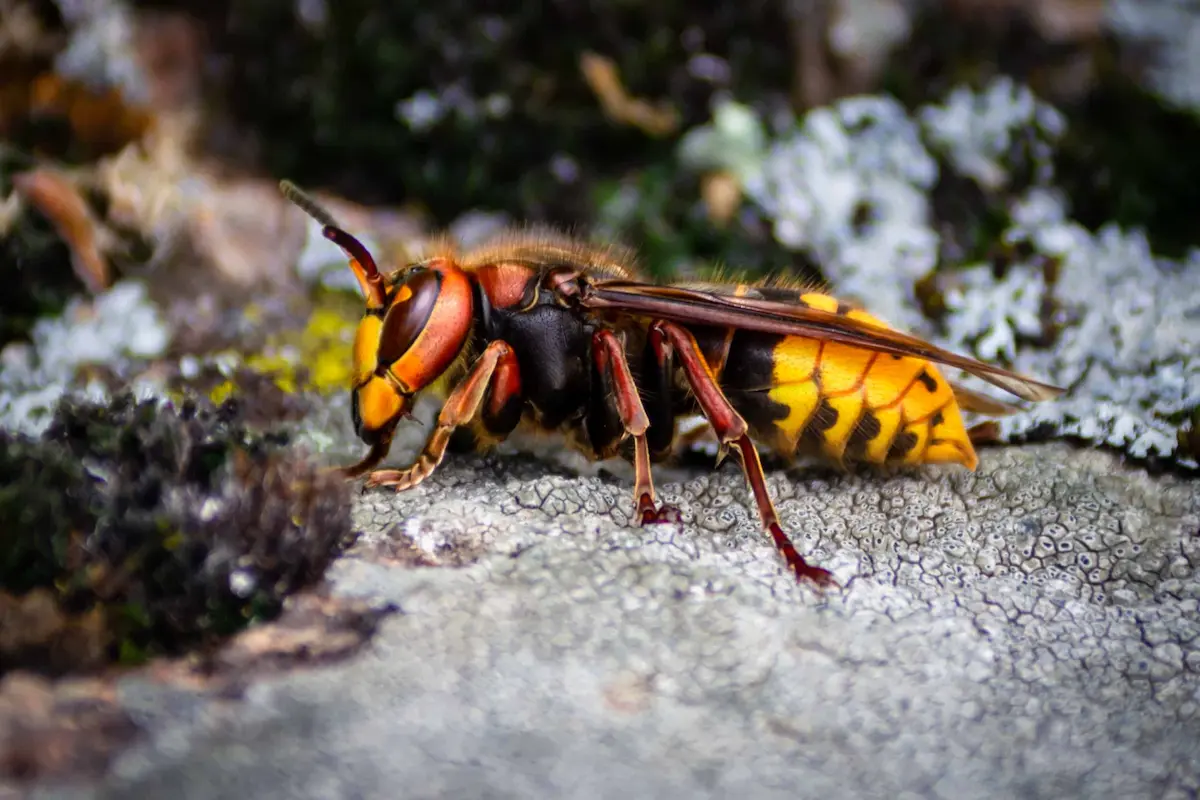
Citations
Gardner, K., Klass, C. and Calderone, N. (2004) Stinging Insects: Bald-Faced Hornets and Aerial Nesting Yellow Jackets, Cornell Department of Entomology. Cornell Cooperative Extension of Oneida County. Available at: http://idl.entomology.cornell.edu/wp-content/uploads/Bald-Faced-Hornets-Yellow-Jackets-CCE.pdf (Accessed: September 2020). Hornets (no date) National Geographic. Available at: https://www.nationalgeographic.com/animals/invertebrates/facts/hornets (Accessed: March 19, 2021). Hornets: Facts About Hornets (no date) The RSPB. Available at: https://www.rspb.org.uk/birds-and-wildlife/wildlife-guides/other-garden-wildlife/insects-and-other-invertebrates/bees-wasps-ants/hornet/ (Accessed: March 19, 2021). Taxonomy (2020) Basic Biology. Available at: https://basicbiology.net/biology-101/taxonomy (Accessed: October 2020). Wasp Nests and Bee Hives (2016) SciShow. YouTube. Available at: https://www.youtube.com/watch?v=kFpLsSwnrNQ (Accessed: April 2020).
Request a Free Quote Today
(We do not share your data with anybody, and only use it for its intended purpose)
